
Our expert scientists are available to discuss your specific project needs and answer your questions.
Contact us to schedule a consultation.
Target Identification Services
Identify the Target of Your Antibody or Recombinant Protein with the Membrane Proteome Array™
Home » Membrane Proteome Array » Target ID Services
Screen for Binding against 6,000+ Human Membrane Proteins
Do you have an antibody, serum sample, or recombinant protein with an unknown target? The Membrane Proteome Array (MPA) can identify its binding partner, providing access to potentially untapped therapeutic targets.
This type of service can have multiple names depending on your scientific goals—target deconvolution, antibody deorphaning, target identification, target discovery. But they all share a common thread: when the MPA reveals an associated target, you’re one step closer to having a novel, developable therapeutic in your pipeline.
Target Identification Projects Can Help Reveal:
✔ New druggable targets
✔ Physiologically relevant human membrane protein interactions
✔ Molecular targets of hits from phenotypic screening studies
✔ Disease-specific antigens from plasma and serum
The Most Physiologically Relevant Platform for Target Deconvolution and Target Identification
The same features that make the MPA the leading platform for antibody specificity testing also make it uniquely suited for identifying the cell-surface targets of antibodies, serum samples, and recombinant proteins.

The MPA is the only platform that individually expresses human membrane proteins in whole, unfixed human cells. That means the proteins your antibody sees in the MPA look like those it would see in vivo, with proper folding and post-translation modifications.

The MPA assesses binding using high-sensitive flow cytometry, yielding quantitative measurements—a distinct advantage over technologies that provide only subjective scores.

The MPA offers unparalleled sensitivity. It is optimized to detect even low-affinity interactions, down to the single-digit micromolar range.
These features significantly increase the MPA’s chances of revealing a biologically relevant target for your molecule.
Learn more about the Membrane Proteome Array.
Technology Overview
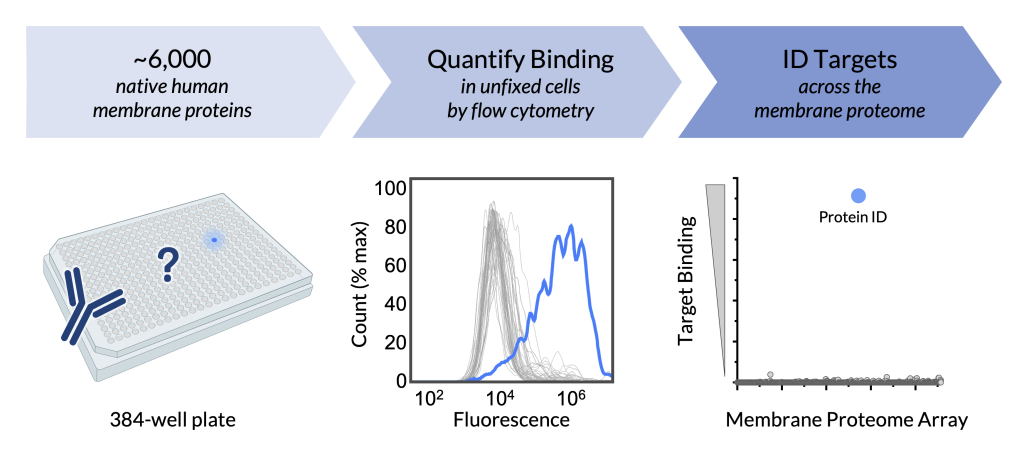
The MPA is compatible with all biotherapeutic modalities, as well as patient serum and plasma. Every hit from your screen goes through a validation step, using a dose-response titration experiment, to yield high-confidence binding results. Hit validation is included in every project.
If your screen yields a validated target, our follow-on Enhanced Binding Analysis service can provide more information about relative binding strength and epitope accessibility.
Unparalleled Success Rate
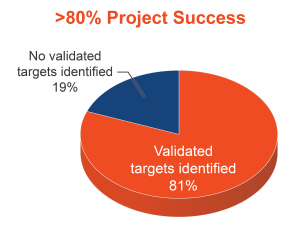
The MPA is a trusted platform with proven results. Our Target Identification services have successfully identified validated targets for more than 80% of projects.*
With our success-based pricing structure, you pay a lower fee if your screen does not identify a hit.
* Based on projects completed in 2024
Applications and Project Types
Antibody Target Deconvolution / Target Identification / Deorphaning
Serum Screening
Phenotypic Molecule Screening
Custom Research Projects
Featured Case Studies
Identifying novel cancer targets

Learn how Totient (now AbSci) used the MPA to deorphan intratumoral antibodies and identify potential oncology targets
Identifying novel cell-specific markers

Learn how the MPA deorphaned panels of cell-type-specific antibodies with unknown targets for validation as new reagents
Contact Us to Get Started
Form not loading? Contact us here
Frequently Asked Questions
How is a Target Identification project different from a Specificity Testing project?
Specificity Testing services are for antibodies or biotherapeutics with a known target. The goal is to identify any unexpected off-target binders using standard workflows and data analysis.
Target Identification services are designed for molecules with unknown targets. The goal is to identify the target that your molecule or sample binds to—also known as target deconvolution, target discovery, or antibody deorphaning.
Because Target ID projects are exploratory in nature, we have more flexibility to customize the approach based on your scientific goals. We will work with you to provide the data that is most useful for your research. For example, if you have a particular interest in liver proteins, we can prioritize hits in liver tissue for validation experiments.
Not sure which service you need? Contact us to discuss your project goals.
What are the material requirements and turnaround times for a Target Identification project?
Materials: We require 500 μg to 1 mg (depending on your screening library preferences) of each antibody or protein you plan to screen. For serum samples, we need 500 μl.
Timeline: Target Identification projects typically take 8-10 weeks from the time we receive your samples and completed paperwork. This timeline is slightly longer than specificity testing projects because finding novel targets often requires more optimization, customer communication, and analysis to ensure we provide you with the most accurate and useful results.
What happens after my Target Identification screen identifies a potential target?
We will perform a validation study on up to 12 “hits” from your screen. This 4-point titration experiment confirms true binding and eliminates false positives, so you can be confident in the results.
For any validated targets of interest, we recommend follow-up functional studies, such as cell killing or live cell binding assays. We can connect you with one of our partner companies to conduct these studies.
What is your success rate for Target ID projects?
About 80% of Target ID projects successfully identify at least 1 validated target. However, due to the exploratory nature of these projects, some samples may not show validated binding to any targets in our library.
Our success-based pricing structure protects your investment—you pay less for any screens that do not return a validated target. If initial screening does not reveal a target, we can also connect you with our partner companies to discuss alternative approaches using complementary technologies.