RESOURCES

Where research scientists come to find up to date resources on antibody discovery against challenging membrane protein targets.

Category: News

Integral Molecular Appoints Cheryl Paes as Vice President of Commercial Strategy

Philadelphia – Integral Molecular, the industry leader in the discovery and characterization of antibodies against membrane proteins, announces that Cheryl Paes has joined the company as Vice President of Commercial Strategy. In this role, Paes will lead strategic initiatives to support the continued commercial growth of the company’s technology platforms to serve the biotechnology and pharmaceutical industries.

Paes brings more than 15 years of global experience helping biotechnology and life sciences organizations grow. In her previous roles at Meridian Life Science and Center for Breakthrough Medicines, she led Marketing and Product Management teams focused on understanding customer needs and delivering strategies that helped clients accelerate their pipelines and achieve better outcomes. Earlier in her career, she held commercial leadership roles at Clarivate Analytics and Zimmer Biomet.

“We are excited to welcome Cheryl to Integral Molecular’s leadership team,” said Benjamin Doranz, CEO of Integral Molecular. “Cheryl brings exceptional experience in translating complex scientific platforms into solutions that help our customers. Under Cheryl’s leadership, we will continue to deepen our partnerships, expand access to our technologies, and continue putting customer needs at the center of everything we do.”

Paes joins at a pivotal time as Integral Molecular expands its portfolio of antibody characterization technologies and industry adoption of its platforms continues to increase. This includes the recently launched Paratope-PLUS™ service, built on the company’s comprehensive CDR-Scanning technology, which provides detailed antibody binding analysis to guide antibody engineering and data to support stronger intellectual property.

Integral Molecular also continues to advance its Membrane Proteome Array™ (MPA), a specificity testing platform used to make antibodies, CAR-T cell therapies, and other biotherapeutics safer by identifying off-target interactions. This platform is currently progressing toward FDA qualification, a milestone furthering its adoption as the industry standard for therapeutic specificity testing.

Paes brings a deep understanding of Integral Molecular’s technologies, having previously served in scientific and business advisory roles at the company. Reflecting on the company’s growth and the opportunities ahead, Paes said, “Integral Molecular is at an inflection point. The science is world-class, regulatory approval is imminent, and the biopharma industry is embracing what these technologies make possible. Integral Molecular is uniquely positioned to reshape how partners solve their hardest problems, and I look forward to helping make that happen.”

To learn more about Integral Molecular’s antibody characterization platforms, visit integralmolecular.com.

About Integral Molecular
Integral Molecular (integralmolecular.com) is the industry leader in developing innovative technologies that advance the discovery of therapeutics against difficult protein targets. With 25 years of experience focused on membrane proteins, viruses, and antibodies, Integral Molecular’s technologies have been integrated into the drug discovery pipelines of over 600 biotech and pharmaceutical companies to help discover new therapies for cancer, diabetes, autoimmune disorders, and viral threats such as SARS-CoV-2, Ebola, Zika, and dengue viruses.

Follow Integral Molecular on LinkedIn

Press Contact
Integral Molecular
Soma Banik, PhD, Director of Public Relations
215-966-6061
info@integralmolecular.com

What Tools Are Available for Specificity Testing During Drug Development?

In this article:

This article is part 2 of a series about specificity testing. Be sure to read part 1, an introduction to the series. 

Summary 

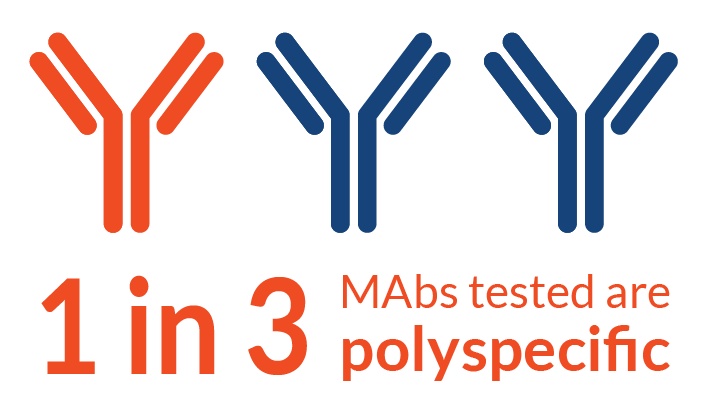
Even though monoclonal antibodies are prized for their specificity, 1 in 3 lead candidates exhibit off-target binding. Because off-target interactions are so common and their safety consequences so large, we need accurate methods for identifying them. Specificity testing during preclinical development typically involves one or both of two technologies: tissue cross-reactivity (TCR) studies, which have been in use since the 1980s, and cell-based protein arrays, which have emerged in the last decade or so. Other methods, including tissue microarrays and spotted protein microarrays, have limitations that make them inappropriate for preclinical safety testing. While early FDA guidance focused on TCR, recent documents have named protein arrays as an appropriate alternative. 

Why is specificity testing important?

Monoclonal antibodies (Mabs) are prized for their exquisite specificity—especially compared to their small-molecule counterparts. Yet a study of therapeutic MAbs in development and on the market showed that 1 in 3 lead candidates exhibited off-target binding (Norden et al., 2024). 
Given the potential consequences of off-target interactions—on patient safety, drug efficacy, pharmacokinetics—it’s essential to have accurate methods for identifying them during preclinical development. That way, we can advance only the safest, most-selective drugs to the clinic. 

In this article, we’ll break down the methods that are currently available for preclinical specificity testing and describe how FDA guidance in this realm has changed over time. 

What is off-target binding?

Off-target binding, also known as cross-reactivity or polyspecificity, is CDR-mediated binding to one or more proteins other than the intended target. Sometimes the off-target is a member of the same protein family, but most often it’s a completely unrelated protein and thus extremely difficult to predict.  

That’s in contrast to polyreactivity, which refers to a more general type of antibody stickiness—an antibody developability challenge in its own right. There are well-known methods for detecting polyreactivity, though we won’t discuss them here.  

For a deeper discussion of polyreactivity and polyspecificity, see Cunningham et al., 2021. 

What off-target specificity testing methods are currently available?

While the FDA has yet to qualify any tools for evaluating biotherapeutic specificity, several technologies exist for this purpose. Specificity testing during preclinical development typically involves tissue cross-reactivity studies, cell-based protein arrays, or both. Other methods, including tissue microarrays and spotted protein microarrays, have limitations that make them inappropriate for regulatory submissions.  
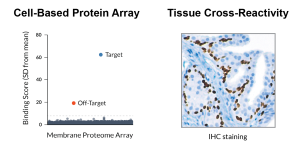
Tissue cross-reactivity (TCR) studies were developed in the early 1980s to meet the need for specificity testing for biologics. This in vitro assay uses immunohistochemistry (IHC) to reveal antibody binding across a panel of human tissue samples from three individual donors. Results are interpreted by a pathologist, who looks for unexpected off-target binding and previously unknown sites of on-target binding. While TCR data is still widely used in regulatory submissions, no validation studies have been published to quantify its sensitivity, false-negative or false-positive rate, or outcome-based results. 

Tissue microarrays (TMAs) consist of up to 1,000 small tissue samples attached to a slide. As with TCR, IHC reveals binding locations within tissues. TMAs are available for purchase, making testing easier, faster, and less costly than TCR studies. However, because the small samples do not faithfully represent all elements of the original tissue, and because TMAs typically are not interpreted by a pathologist, they are less rigorous than TCR. TMAs are best suited as a research tool for investigating target expression profiles and screening for specificity earlier in development. 

Spotted protein arrays consist of recombinant proteins from bacteria, yeast, or eukaryotic cell lysates spotted onto a solid surface. While these tools typically represent a high percentage of human proteins and come at an affordable price point, they sacrifice protein integrity. Limitations include a lack of post-translational modifications due to non-mammalian cell production, altered protein conformations, protein denaturation, and unnatural surface interactions. Most importantly, spotted protein arrays do not accurately represent multi-pass membrane proteins (the targets of most biotherapeutics), which typically require a lipid bilayer to maintain their native structure.  

Cell-based protein arrays (CBPAs) have emerged in the last decade or so as a faster, less costly, and more precise alternative to TCR studies. CBPAs, such as the Membrane Proteome Array, are a higher-throughput in vitro technology using vertebrate (usually human) cells that overexpress thousands of individual proteins in their natural conformation with post-translational modifications. Binding is evaluated by either IHC or flow cytometry. While TCR reveals only the locations of off-target binding, CBPAs identify the off-target proteins across the human membrane proteome, enabling detailed follow-up study. CBPAs are commonly used early in drug development for lead selection and later for regulatory submissions. 

How has FDA guidance for specificity testing changed over time?

When it comes to selecting specificity testing tools for preclinical safety studies, drug developers generally follow guidance for regulatory submission provided by the FDA and similar agencies around the globe.  

Regulatory documents first described TCR in 1983. In the mid-1990s, regulatory agencies, including the EMA and FDA, began formally recognizing the need to assess specificity testing. The FDA formally recommended TCR in 1997 as the best available tool at the time.  

Regulatory agencies have long anticipated that new specificity testing technologies would emerge, potentially enhancing or even replacing TCR data. In its 1997 guidance the FDA stated, “appropriate newer technologies should be employed as they become available and validated.” Similarly, in 2011, ICH biotherapeutic guidance stated, “other technologies can be employed in place of IHC techniques to demonstrate target/binding site distribution.” 

In January 2024, the FDA for the first time delineated specific alternative methods to TCR studies. In their new guidance document for CAR-T therapeutic development, they named “protein arrays” as an appropriate specificity testing method. This brief mention formalized a shift that had already begun. Because TCR lacks the sensitivity required for CAR-T testing, drug developers had already been using cell-based protein arrays for this purpose, and the FDA had already accepted this data in dozens of IND submissions. 
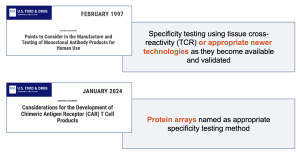
1FDA, 1997. Points to Consider in the Manufacture and Testing of Monoclonal Antibody Products for Human Use  

2FDA, 2024. Considerations for the Development of Chimeric Antigen Receptor (CAR) T Cell Products  

 Most recently, the FDA signaled an even greater shift toward advancing human-relevant new-approach methodologies (NAMs). In April of 2025, the FDA released a “Roadmap to reduced animal testing in preclinical safety studies,” outlining its plan to leverage NAMs to replace, reduce, and refining animal testing. Essential to this vision, the FDA has plans to advance human-relevant methods like organoid systems, computational modeling, and advanced in vitro assays.  

The Membrane Proteome Array is a high-throughput in vitro cell-based screening assay that embodies the FDA’s vision. It screens the full human membrane proteome with objective, quantitative results rather than the subjective tissue analysis methods that have defined the field for 40 years. In the coming articles, we’ll explore what that means in practice.

Looking ahead 

For the next article in this series, we’ll dig deeper into TCR studies, their limitations, and how much they influence drug development decisions (spoiler: not much).


Follow Our DDT Qualification Journey

Welcome to Specificity Insights, our blog about current developments in antibody specificity testing! Over the coming months, we’ll be releasing a multi-part series about specificity testing with the Membrane Proteome Array (MPA) and our journey to qualify the MPA as a Drug Development Tool (DDT) through the FDA’s ISTAND program.  

Through this series, you’ll gain access to detailed information about our regulatory-ready specificity testing service and an inside look at the ISTAND qualification process. We’ll also share broader news about specificity testing and developments at Integral Molecular. 

What’s this Series About? 

In 2021, we began working toward qualifying our MPA specificity testing platform as a DDT under the FDA’s ISTAND program. Qualification is a rigorous process. It has involved extensive discussions with the FDA about our technology, processes, and data, along with implementing their suggestions for enhancements. In late 2025, we submitted our Full Qualification Package (FQP), the final set of information the FDA needs to make their decision. 

The FQP is a comprehensive document loaded with valuable information. While some details remain confidential—like trade secrets and project data—much of it can be shared. We’ll be breaking down much of that content through this blog series, providing detailed insights into the questions the FDA asked us and our responses.  

In a few weeks, we’ll also release an ebook with even more information. This document will be useful for anyone seeking details about our specificity testing platform. And for those working toward qualifying their own DDT, it will provide insights into the FDA’s thinking. 

Why Pursue FDA Qualification? 

For anyone considering qualifying a tool through ISTAND, we highly recommend it. The experience has been invaluable. FDA review and input have transformed an already unmatched specificity testing platform into a tool that’s even more robust, reproducible, scalable, and well-documented.  

To date, DDTs are under-utilized in drug development and rarely included in IND filings. To increase DDT adoption, the FDA is actively encouraging others to qualify their tools, and they are incentivizing drug developers to use these tools and include the resulting data in their regulatory submissions. DDTs, they believe, will help get better treatments to patients faster. 

Looking Ahead: What’s Coming in This Series  

This series will cover a broad range of topics, including: 

→ Why current specificity testing methods fall short 

→ What the FDA qualification process looks like from the inside 

→ What we learned from screening 2,000+ biotherapeutics 

→ The quality systems behind regulatory-grade testing 

→ How to interpret and use specificity data for decision-making 

…and much more 

Webinar Presented by Integral Molecular and IPWatchdog – Resurrecting Antibody Genus Protection: Allowed Claims Through CDR-Scanning

Thursday, March 5, 2026
12 pm ET
View the recording

New antibody patenting strategies, such as structure-based genus and means plus function claims, are reshaping how antibody genus claims are being written post Amgen v. Sanofi. Join us on Thursday, March 5, 12:00 PM ET, as we discuss examples of antibody genus claims recently allowed by the USPTO based on these strategies.

This webinar will explore:

  • New antibody claim strategies that provide a viable path forward for genus claims that align with current USPTO and case-law guidance on enablement and written description
  • How comprehensive CDR-Scanning is being used to obtain genus claims based on the common structural feature of the antibody’s paratope (as described in Banik et al., 2025, Nature Biotechnology)
  • Examples of antibody genus claim structures recently allowed by the USPTO


View the recording

Integral Molecular’s Membrane Proteome Array™ Nears FDA Qualification as a Drug Development Tool

MPA on track to become the first NAM approved by the FDA for specificity testing

Philadelphia – Integral Molecular, a leader in antibody discovery and characterization, announces that its Membrane Proteome Array™ (MPA) used to assess antibody specificity is entering its final stage of FDA review to become a Drug Development Tool (DDT). This follows Integral Molecular’s submission of a Full Qualification Package (FQP) to the FDA.

The MPA is a fully validated New Approach Methodology (NAM) that assesses therapeutic antibodies in a human-relevant, cell-based system prior to clinical studies, aligning with the FDA’s vision to accelerate the use of in vitro assays that better predict drug safety. This cell-based protein array (CBPA) is the only platform that measures antibody binding to human membrane proteins in their structurally intact, native conformation in a quantitative and comprehensive manner across ~6,000 proteins in the membrane proteome, enabling early identification of off-target interactions that can impact safety. Off-target assessment of therapeutic antibodies is a critical preclinical safety requirement, especially with evidence showing that 1 in 3 monoclonal antibodies exhibit off-target binding.1

Learn more about the Membrane Proteome Array™, a fully validated New Approach Methodology (NAM) to test antibody specificity.

Collaboration With FDA Drives Key Improvements

Working closely with the FDA, Integral Molecular is making key enhancements to the MPA platform that include:

  • Expanded MPA library encompassing fetal and maternal proteins, heterocomplexes, and secreted proteins
  • Statistical analysis of protein interactions to rigorously evaluate levels of off-target binding
  • Bioinformatic assessment to interpret the biological ramifications of off-target binding in tissues
  • ISO 9001 certification of the company’s quality management system, with enhanced 21 CFR Part 11-compliant record-keeping

“The MPA is used by over 250 biopharmaceutical companies to test the specificity of therapeutic antibodies, helping ensure they target only their intended proteins,” said Benjamin Doranz, CEO of Integral Molecular. “While MPA data are already routinely included in regulatory submissions, including over 100 INDs, formal qualification as a DDT will streamline regulatory review.”

The MPA is progressing toward DDT qualification as the first technology reviewed under the FDA’s ISTAND Program (Innovative Science and Technology Approaches for New Drugs). Submission of the Full Qualification Package marks the final step in the process and represents an important milestone towards establishing this NAM-based antibody specificity testing method as a regulatory standard.

1 Norden et al. mAbs. 2024. doi:10.1080/19420862.2024.2393785.

About Integral Molecular
Integral Molecular (integralmolecular.com) is the industry leader in creating transformative technologies that advance the discovery of therapeutics against difficult protein targets. With 20+ years of experience focused on membrane proteins, viruses, and antibodies, Integral Molecular’s technologies have been integrated into the drug discovery pipelines of over 600 biotech and pharmaceutical companies to help discover new therapies for cancer, diabetes, autoimmune disorders, and viral threats such as SARS-CoV-2, Ebola, Zika, and dengue viruses.

Follow Integral Molecular on LinkedIn

Press Contact:
Integral Molecular
Soma Banik, PhD, Director of Public Relations
215-966-6061


10x Faster Virus Neutralization Testing With Launch of Integral Molecular’s Ready Reporter Virus™ Kit

Automation-compatible, safe assay delivers same-day results to accelerate vaccine and therapeutic antibody development

Philadelphia – Integral Molecular, a leader in developing innovative tools for antiviral research, announces the launch of its Ready Reporter Virus™ (RRV) neutralization assay kit. This automation-compatible, safe assay assesses the effectiveness of vaccines and therapeutic antibodies and is set to transform how virus neutralization testing is performed. While conventional assays can take up to a week, the RRV kit delivers results in under 4 hours—10 times faster than current standards.

Learn more about RRVs, designed for high-throughput, automatable virus neutralization testing

Conventional neutralization assays are labor intensive, requiring live pathogenic virus, specialized biosafety facilities, cultivation of cells under sterile conditions, and often manual counting of results. These barriers make testing impossible for most laboratories worldwide. In contrast, RRVs do not replicate or cause disease and do not require cell culture, making this assay accessible to all scientists. RRV kits come with thaw-and-mix reagents and use simple workflows ideal for automation, a key consideration for scientists who need to screen hundreds or even thousands of samples.

Integral Molecular is the industry leader in providing viral particles to the vaccine industry, including its catalog of 100+ pseudotyped Reporter Virus Particles (RVPs) and Influenza TiterSafe™ Particles, a non-infectious alternative to the hemagglutination assay. RRVs expand this portfolio, giving scientists a powerful new way to perform rapid, safe virus neutralization experiments.

How RRV technology works

RRVs are non-pathogenic, non-replicative virus-based particles that display authentic native viral proteins on their surface. Like live viruses, RRVs enter human cells through natural receptor interactions, providing biologically relevant neutralization data for therapeutic candidates. The RRV kit supplies live target cells preloaded with a dye that provides a quantitative readout immediately upon virus entry, so an end user just needs to thaw and mix the supplied reagents to assess virus infection.

Applications of the RRV kit include:

  • Serum testing from humans or animals for vaccine-induced neutralization
  • Neutralization testing and lot-release for therapeutic antibodies
  • Public health applications including disease surveillance

“Integral Molecular has long been committed to delivering safe, reliable tools that expand the ability of labs to conduct antiviral research critical for vaccine development,” said Benjamin Doranz, PhD, CEO of Integral Molecular. “With RRVs, we are making neutralization testing not just faster, but also simpler, cost-effective, and more accessible for scientists who need robust, automatable assays without the burden of cell culture.”

RRV kits are currently available for viruses including influenza, SARS-CoV-2, and VSV. Kits are manufactured under ISO 9001-certified quality processes and can be customized for additional viruses or variants of interest. RRVs will be launched in a presentation by Christina Go, PhD, at the World Vaccine Congress this week in Amsterdam.

About Integral Molecular
Integral Molecular (virology.integralmolecular.com) is the industry leader in creating transformative technologies that advance the discovery of therapeutics against difficult protein targets. With 20+ years of experience focused on viruses, antibodies, and membrane proteins, Integral Molecular’s technologies have been integrated into the drug discovery pipelines of over 600 biotech and pharmaceutical companies to help discover new therapies for viral threats such as SARS-CoV-2, Ebola, Zika, and dengue viruses, as well as chronic diseases such as cancer, diabetes, and autoimmune disorders.

Follow Integral Molecular on LinkedIn

Press Contact:
Integral Molecular
Soma Banik, PhD, Director of Public Relations
215-966-6061

Ready Reporter Viruses (RRVs) enable neutralization testing in under 4 hours, 10x faster than conventional assays. RRVs work by instantaneous detection of viral entry using a fluorescence-based readout. This rapid, safe, and simple assay enables automatable workflows that can be performed in a standard laboratory setting.

Integral Molecular Out-Licenses First-in-Class Antibody Panel Targeting SLC2A4 Glucose Transporter

Philadelphia –Integral Molecular, the industry leader in discovering antibodies against membrane proteins, is pleased to announce that it has out-licensed a panel of highly selective antibodies for the glucose transporter SLC2A4 (also known as GLUT4) for therapeutic development. The transporter has eluded antibody discovery efforts due to its structural complexity, making it inaccessible using traditional antibody discovery methods.

The antibodies licensed by Integral Molecular represent the first-ever monoclonal antibodies described against SLC2A4 and include antibodies specific to the inward-open and outward-open states of the transporter. These molecules were discovered using Integral Molecular’s proprietary technology suite, specifically tailored to access difficult membrane protein targets.

Integral Molecular’s specialized antibody discovery technologies include:

  • MPS Antibody Discovery platform – Elicits robust immune responses even against the most complex proteins and rare epitopes
  • Paratope-PLUS™ – Enhances antibody intellectual property and engineering
  • Membrane Proteome Array™ – Ensures absolute specificity by screening for off-target binding across a panel of 6,000 native-conformation membrane proteins

“Many diseases remain difficult to treat because the proteins involved in the disease pathway are simply too difficult to target,” said Joseph Rucker, PhD, Vice President of R&D at Integral Molecular. “We are thrilled that our platform opens doors to previously untapped targets. We look forward to helping bring SLC2A4-based therapeutics to patients.”

Explore Integral Molecular’s pipeline of therapeutic antibody assets
available for licensing

About Integral Molecular
Integral Molecular (integralmolecular.com) is the industry leader in creating transformative technologies that advance the discovery of therapeutics against difficult protein targets. With 20+ years of experience focused on membrane proteins, viruses, and antibodies, Integral Molecular’s technologies have been integrated into the drug discovery pipelines of over 600 biotech and pharmaceutical companies to help discover new therapies for cancer, diabetes, autoimmune disorders, and viral threats such as SARS-CoV-2, Ebola, Zika, and dengue viruses.

Follow Integral Molecular on LinkedIn

Press Contact:
Integral Molecular, Inc.
Soma Banik, PhD, Director of Public Relations
215-966-6061
info@integralmolecular.com
www.integralmolecular.com

Integral Molecular Named a Top Workplace by Philadelphia Inquirer

Philadelphia – Integral Molecular, a founding member of Philadelphia’s biotechnology hub, has been recognized as a 2025 Top Workplace by the Philadelphia Inquirer. This honor is based entirely on employee feedback and benchmarking against national standards, gathered through a confidential survey.

See the full list of Top Workplaces named by the Philadelphia Inquirer

“We are honored to be recognized as a 2025 Top Workplace in Philadelphia,” said Sharon Willis, PhD, Co-founder of Integral Molecular. “This award reflects the collaborative and mission-driven culture we have built together, where people are supported to thrive in their career. Our company’s growth is based on continuing to hire remarkable people.”

Integral Molecular’s success is rooted in its commitment to people and its supportive culture.

  • Employee Development and a People First Culture. A supportive work environment where individual and team accomplishments are celebrated.
  • Community Partnerships: Strong connections with local organizations for recruiting, training, and retaining homegrown talent.
  • Biotechnology Leadership: Active participation in regional initiatives such as the Keystone Life Sciences Collaborative, promoting the expansion of the Pennsylvania life sciences ecosystem.

This recognition follows a year of notable achievements for the company. Integral Molecular was also named an Employer of Choice by the City of Philadelphia, and CEO Benjamin Doranz was honored as CEO of the Year by Life Sciences PA. Integral Molecular continues to grow, with multiple positions open.

Learn more about Integral Molecular and view open positions

About Integral Molecular
Integral Molecular (integralmolecular.com) is the industry leader in creating transformative technologies that advance the discovery of therapeutics against difficult protein targets. With 20+ years of experience focused on antibodies, membrane proteins, and viruses, Integral Molecular’s technologies have been integrated into the drug discovery pipelines of over 600 biotech and pharmaceutical companies to help discover new therapies for cancer, diabetes, autoimmune disorders, and viral threats such as SARS-CoV-2, Ebola, Zika, and dengue viruses.

Follow Integral Molecular on LinkedIn

Press Contact:
Integral Molecular, Inc.
Soma Banik, PhD, Director of Public Relations
215-966-6061
info@integralmolecular.com

Webinar Presented by Integral Molecular and Fierce Biotech – Best Practices for Antibody Specificity Testing for IND Submissions

Thursday, June 5, 2025
View the recording

Off-target binding can be a significant hurdle in the development of antibody-based therapies, contributing to both drug attrition and adverse events in patients. Recent analysis of a panel of preclinical and clinical stage antibodies identified a surprisingly high off-target rate across the industry, with up to one-third of antibody drugs displaying off-target binding. Limitations of conventional screening methods, mainly tissue cross-reactivity (TCR) studies, have contributed to polyspecificity going undetected. So, what are the alternatives?

Join our webinar to learn about a better approach to specificity profiling using new, innovative cell-based protein arrays. We’ll take a deep dive into the Membrane Proteome Array (MPA), a 7,000-protein array platform that tests binding of biotherapeutics across the full human membrane and secreted proteome, expressed in unfixed cells.

Participants will learn how:

  • Integral Molecular’s MPA rapidly and accurately identifies potential off-target binding liabilities
  • MPA data support both lead selection and IND submissions with advantages over tissue cross-reactivity studies
  • Cell-based protein arrays, like the MPA, are rapidly progressing towards FDA endorsement

View the recording