
Using Membrane Proteome Array™ Specificity Testing for Regulatory Success
An IND-ready service for off-target specificity testing
Home » Membrane Proteome Array » MPA+IND Service for Regulatory Submissions » Specificity Testing for IND Success
On this page:
A New Approach Methodology for Human-Relevant Specificity Data
The Membrane Proteome Array (MPA) is an industry-leading specificity testing platform that is already being used routinely in regulatory submissions. This unique cell-based protein array (CBPA) screens for potential off-target interactions using completely native epitopes on proteins expressed in whole cells—delivering the most physiologically relevant binding data of any platform. As regulatory bodies increasingly emphasize human-relevant data, the MPA stands at the forefront of a new generation of safety assessment tools.
The MPA is a New Approach Methodology (NAM) that directly supports the FDA’s vision to accelerate the use of in vitro assays to better predict drug safety. Regulatory agencies worldwide are actively encouraging the development and adoption of NAMs, recognizing their potential to provide more relevant, reliable safety data.
This shift is not just aspirational—it’s happening now. In an April 2025 announcement, the FDA made clear that implementation of NAMs, including advanced in vitro assays like the MPA, “will begin immediately for investigational new drug (IND) applications, where inclusion of NAMs data is encouraged.” The message is clear: the FDA wants to see this type of human-relevant data in your submissions.
The MPA is currently in the final stage of the process to become an FDA-qualified Drug Development Tool (DDT), representing years of collaboration with the agency to ensure the MPA meets the highest standards.
To learn more about our specificity testing services, visit the Membrane Proteome Array page.
Designed from the Beginning for FDA Standards
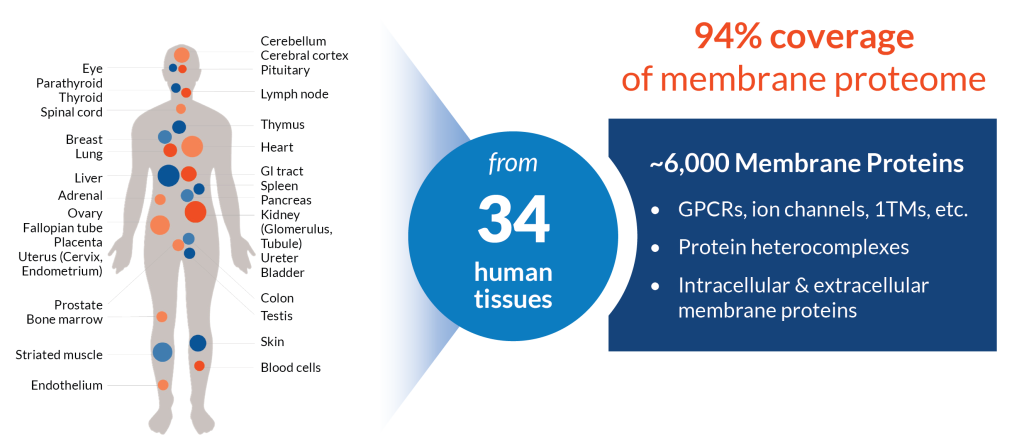
The Membrane Proteome Array (MPA) was purpose-built with FDA guidance and patient safety in mind. It analyzes binding to ~6,000 membrane proteins simultaneously using quantitative flow cytometry. The MPA library is based on membrane proteins present in all 34 tissues recommended in the FDA’s 1997 guidance document on biotherapeutic safety (see Appendix 1). It represents 94% of the human membrane proteome, including heterocomplexes, GPI-linked proteins, and proteins expressed in placental and fetal tissues.
Off-target specificity testing is a crucial part of biotherapeutic safety assessment. Since 1997, as part of Investigational New Drug (IND) submissions to begin clinical trials, the US FDA has required specificity testing for antibody-based therapeutics. For many years, the only methods available to assess on-target and off-target binding were tissue-based immunohistochemical screens commonly known as tissue cross-reactivity (TCR) studies.
Yet even in its initial guidance, the FDA envisioned that newer, better technologies would emerge, stating “Appropriate newer technologies should be employed as they become available and validated.” With the ability to deliver quantitative data and precisely identify potential off-targets, the MPA is a newer technology that delivers data beyond the capabilities of TCR. Its data is an important addition to the weight of evidence supporting a molecule’s safety profile. And as detailed in Norden et al. (2024), the MPA also identifies off-targets that TCR studies miss.
What Are NAMs and How Does MPA Fit In?
New Approach Methodologies (NAMs) are purpose-built, human-relevant tools for assessing drug safety. They represent a shift from traditional methods, with a focus on improving predictive value for clinical outcomes, reducing animal use, shortening drug development timelines, and reducing costs.
The MPA is a unique cell-based protein array (CBPA), an advanced in vitro assay that screens for binding across the human proteome. The MPA can identify proteins that have off-target interactions with your molecule early in drug development to significantly de-risk your program. Unlike competing technologies, the MPA delivers quantitative binding data for every protein in the screen for clear and actionable results.
The FDA has created specific pathways for evaluating NAMs and encouraging their adoption. ISTAND (Innovative Science and Technology Approaches for New Drugs) is one such pathway, and the MPA is approaching full qualification as a DDT through this program.
Advancing Toward Full FDA Qualification as a Drug Development Tool
The FDA created the ISTAND program with the goal of bringing effective treatments to patients faster. Their vision has been to advance tools that reduce time and cost for drug developers while increasing safety for patients. By qualifying new and innovative Drug Development Tools (DDTs), the FDA aims to encourage the use of scientifically validated methodologies and streamline regulatory review.
The MPA was the first tool ever accepted into ISTAND—a testament to both the platform’s scientific merit and the FDA’s recognition of the need for better specificity testing methods. Since the MPA’s acceptance, the FDA has elevated ISTAND from a pilot program to a permanent program for DDT qualification, underscoring the agency’s commitment to this approach.
Qualification under ISTAND is a rigorous, multi-year process that we began in 2021. We have submitted all required documents and are now awaiting final FDA review and approval.
As we near full qualification, the FDA has reviewed every detail about the MPA and provided their feedback. This process ensures that the MPA’s regulatory-ready data report is addressing the questions that regulators need answered, and that the platform’s experimental processes, data quality practices, and scientific validity meet the highest-level standards.
The outcome of this process will be significant. The MPA will be recognized as a scientifically validated tool for its stated context of use (COU)—as a primary means to determine specificity of antibody-based biotherapeutics for improved safety profiling in IND applications. Importantly, the MPA remains the only CBPA with an approved Qualification Plan and is set to become the first FDA-approved NAM-based specificity test, demonstrating our leadership in advancing regulatory practices for specificity testing.
What Does FDA Qualification Mean for My Program?
Because the FDA today readily accepts MPA specificity data for IND submissions, you don’t need to wait for final qualification to benefit from the MPA. However, qualification will further streamline and potentially accelerate the review process.
The FDA is actively encouraging the use of NAMs. The agency has made it clear that including NAMs data can facilitate the review process, and they’re working to make it as easy as possible to incorporate this data into submissions. Once the MPA achieves full qualification for its context of use, the FDA will accept the data without having to reassess its suitability for each individual submission.
Beyond the procedural benefits, MPA data enhances the weight of evidence supporting your molecule’s safety profile. By providing quantitative, protein-level specificity data that complements traditional tissue-based approaches, the MPA gives regulators, and you, a more complete picture of your therapeutic’s binding characteristics.
“Once qualified, any sponsor could use that New Approach Methodology (NAM) in an application with confidence that the FDA will accept the data.”
-FDA, Roadmap to Reducing Animal Testing in preclinical Safety Studies
Regulatory-Ready Data and Expert Support
Navigating regulatory requirements for specificity testing can be complex. Our team brings deep expertise in FDA guidance on specificity testing and can help advise you on when to test, what questions to ask the FDA during pre-IND meetings, and how to interpret your MPA results.
Our IND-ready report is designed to be included directly in your IND submission. Through our work with the FDA during the ISTAND qualification process, we’ve refined our reporting to include all the details regulators need. However, if the FDA requests additional information during review, we’ll have it ready for you. Our tracking software, documentation, and rigorous quality processes mean we can quickly provide raw data or additional context as needed.
Beyond the core MPA screening, we are committed to ensuring your IND success with services for statistical comparisons of off-targets, bioinformatics analytics for tissue location, and intracellular localization experiments. This comprehensive approach ensures you have actionable insights that strengthen your regulatory submission and inform your development strategy.

Ready to Learn More?
The MPA delivers the human-relevant specificity that regulators are seeking—and it’s available for your program today. Submit the form to schedule a consultation, learn more about the MPA, or stay up to date on our progress toward ISTAND qualification.
Frequently Asked Questions
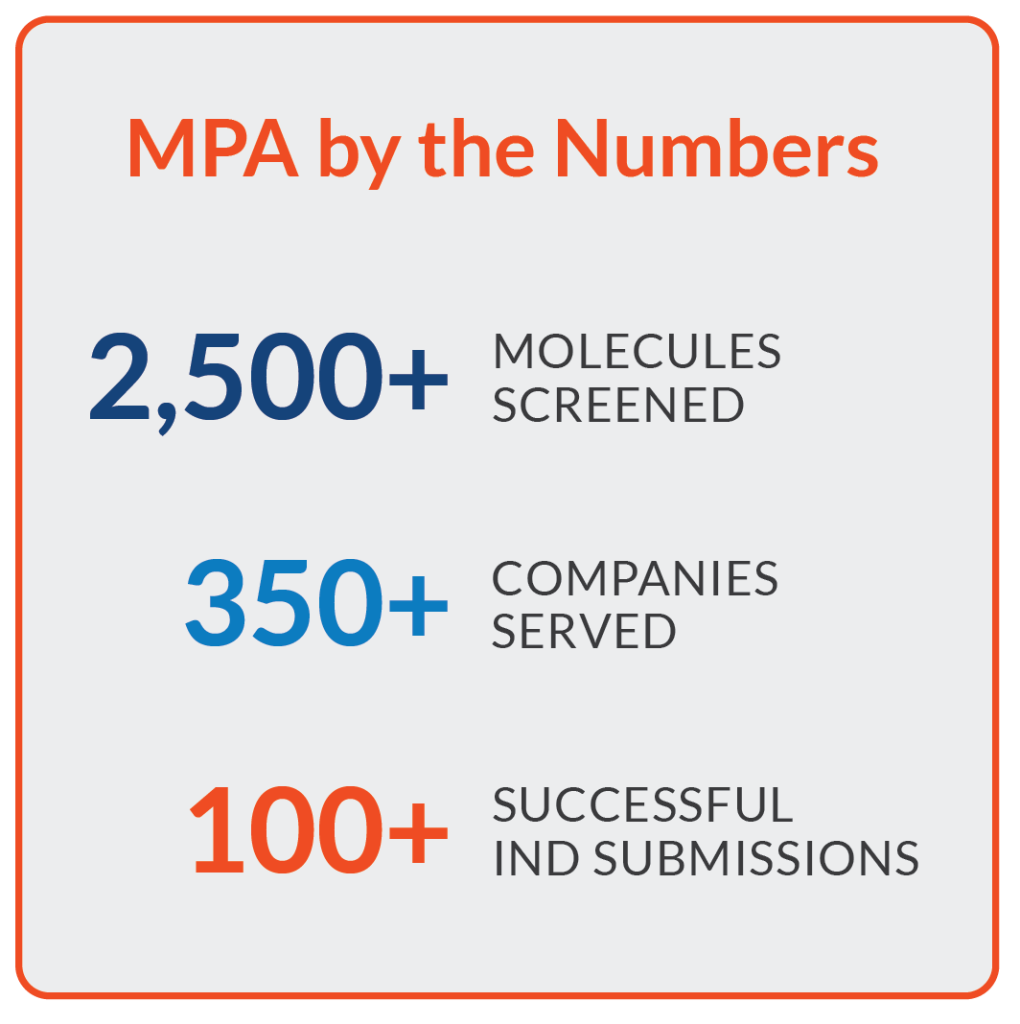
Yes! MPA data has been successfully included in over 100 regulatory filings around the globe, including in dozens of IND applications to the FDA. MPA data has served as a powerful complement to IHC-based cross-reactivity studies, and in many cases on its own as an alternative to tissue cross-reactivity (TCR) studies.
The FDA’s Innovative Science and Technology Approaches for New Drugs (ISTAND) program provides a pathway for evaluating and qualifying novel tools, including New Approach Methodologies (NAMs), that can improve drug development and regulatory review processes. Through the ISTAND program, Drug Development Tools (DDTs) are qualified for a particular purpose or “context of use.” Qualified DDTs can then be incorporated into drug development programs and regulatory submissions for that pre-defined purpose without the FDA needing to re-evaluate their suitability.
The ISTAND program helps drive the validation and adoption of cutting-edge approaches to drug development. Run by the Center for Drug Evaluation and Research (CDER), ISTAND provides a rigorous pathway for innovative platforms to gain regulatory qualification, ultimately helping to bring better treatments to patients faster.
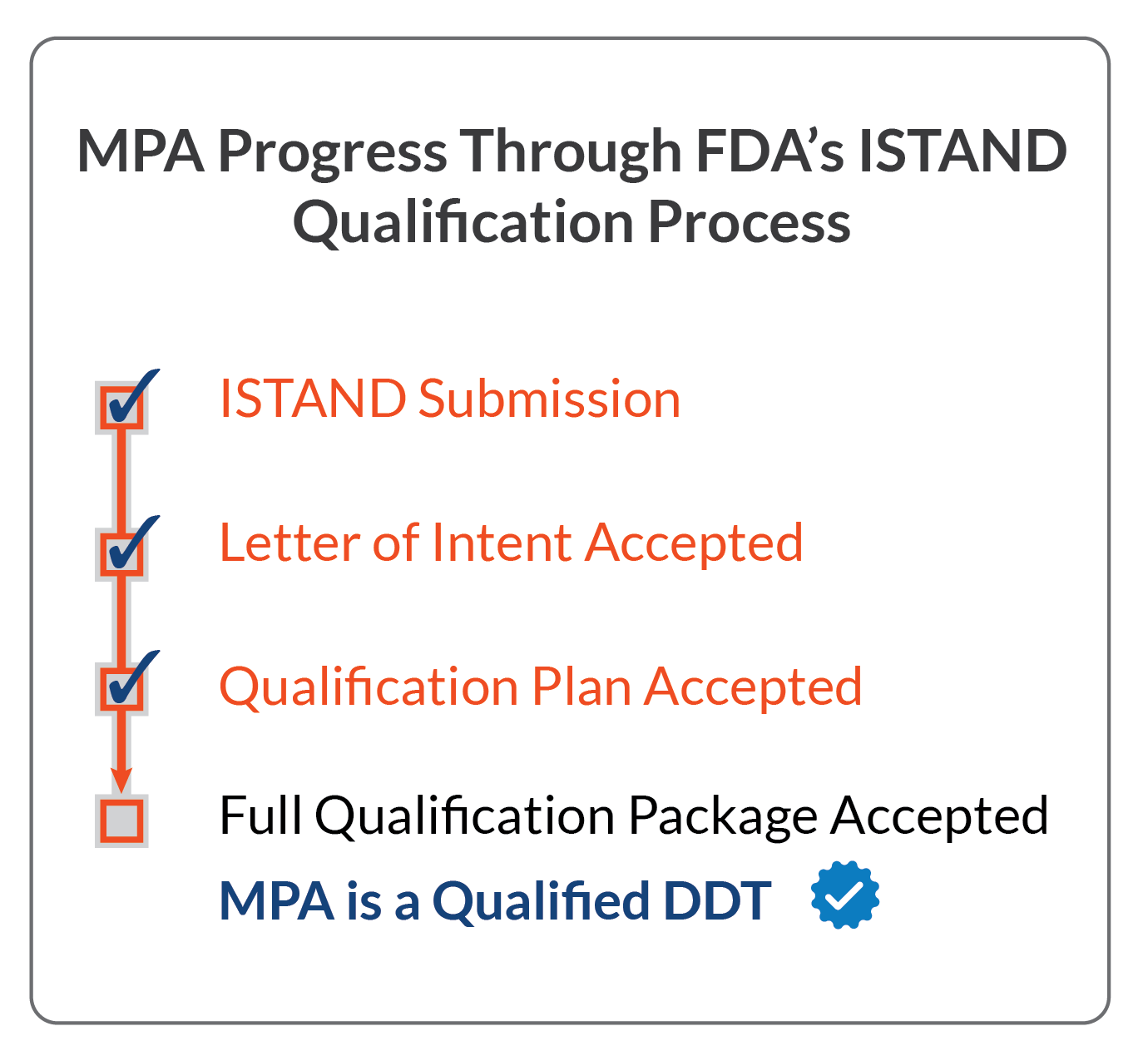
The MPA is in the third and final stage of FDA qualification. Evaluation under the ISTAND program is a rigorous multi-year process designed to ensure new technologies meet the highest regulatory standards for use in drug development. Through this process, we have been in continuous dialogue with the FDA, with detailed technical discussions, responses to regulatory questions, and platform refinements based on direct agency feedback.
Stage 1: Letter of Intent (LOI) – We submitted a comprehensive proposal detailing the critical unmet need in biotherapeutic specificity testing and the MPA’s ability to address gaps left by traditional methods. Our LOI was the first ever accepted into the ISTAND program, in 2022.
Stage 2: Qualification Plan (QP) – We collaborated extensively with the FDA to design a detailed study plan demonstrating the MPA’s analytical performance. The FDA approved our QP in early 2025.
Stage 3: Full Qualification Package (FQP) – Later in 2025, we submitted our FQP, providing extensive validation data to support the platform’s reproducibility, repeatability, and robustness to ensure it meets all regulatory expectations.
The FQP submission now places the MPA under final FDA review for qualification as a DDT. A qualification decision is expected in 2026.
Documents and additional project details are available through the FDA’s DDT Qualification database.
*The context of use for the MPA is as a primary means to determine specificity of antibody-based biotherapeutics for improved safety profiling in IND applications.